
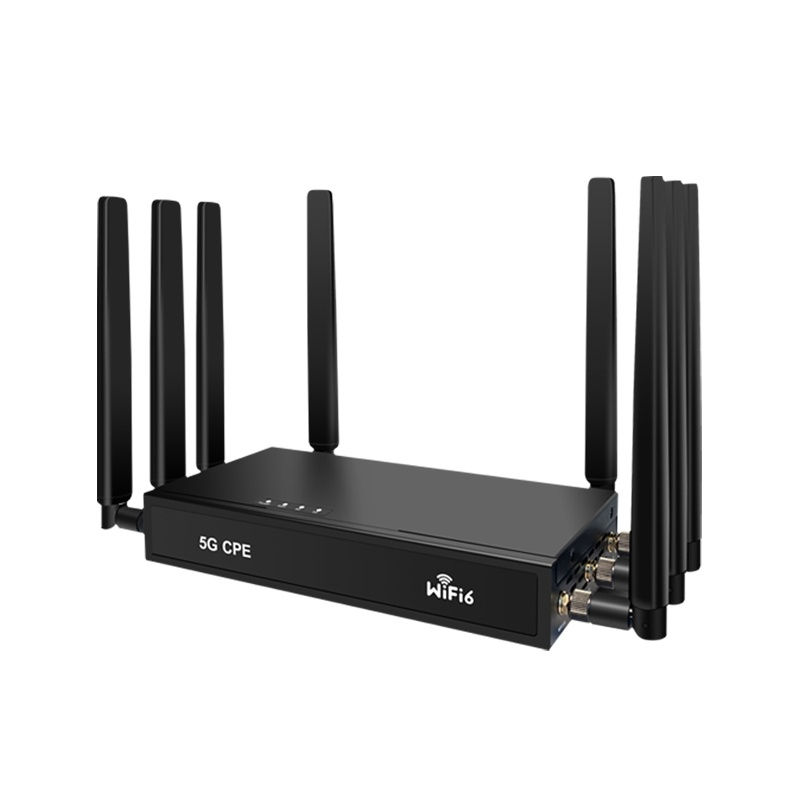
In the network communication architecture, Customer Premises Equipment (CPE) is the core device connecting the operator’s network and user terminal devices, known as the “last mile” of network access. Whether it is home broadband access, enterprise network deployment, or remote area network coverage, CPE plays an irreplaceable role. It can convert the operator’s wireless signal (such as 4G/5G) or wired signal (such as optical fiber) into a signal that terminal devices can identify and use, realizing stable network access for multiple devices. This article will comprehensively interpret CPE from the aspects of definition, classification, working principle, and application scenarios.
CPE refers to network equipment deployed on the user side (home, enterprise, or outdoor), whose core function is to realize the conversion and distribution of network signals. Unlike wireless APs that focus on wireless coverage, CPE is more inclined to “signal conversion and access”, connecting the operator’s backbone network with user terminal devices. Its working process is relatively simple: first, it receives the network signal from the operator (wireless signals such as 4G/5G, or wired signals such as optical fiber/DSL), converts the signal into a standard Ethernet signal or WiFi signal through an internal modem and chip, and then distributes it to terminal devices through wired ports (RJ45) or wireless WiFi, enabling terminal devices to access the Internet.
According to the differences in access technology and application scenarios, CPE can be divided into multiple types to meet diverse user needs. From the perspective of access technology, it can be divided into fixed network CPE and mobile network CPE: fixed network CPE relies on wired access such as optical fiber and DSL, with stable bandwidth (gigabit level), suitable for home broadband and enterprise dedicated lines; mobile network CPE supports wireless access such as 4G/5G, no need for wiring, flexible deployment, suitable for remote area broadband, temporary office networks, and outdoor temporary communication scenarios. From the perspective of application scenarios, it can be divided into home-level CPE and enterprise-level CPE: home-level CPE is small in size, with 1-4 network ports, supporting WiFi 5/6, and the cost is relatively low, suitable for home multi-terminal networking; enterprise-level CPE has 8-24 network ports, supporting PoE power supply, VPN, and firewall functions, with high stability and security, suitable for small and medium-sized enterprise offices and monitoring systems.
The core advantages of CPE are reflected in its flexibility, stability, and strong compatibility. First, the deployment is flexible: mobile network CPE can be used without wiring, and can be quickly deployed in temporary scenarios such as construction sites and outdoor activities; fixed network CPE can be integrated with existing wired networks to realize seamless connection. Second, the signal conversion is efficient: it can stably convert operator signals into signals usable by terminal devices, ensuring low latency and high speed of data transmission. Third, strong compatibility: it supports a variety of network protocols and terminal devices, and can connect to mobile phones, computers, IP cameras, smart home devices, and other equipment at the same time, meeting the diverse access needs of users. Fourth, easy management: most CPE supports remote management protocols (such as TR069), which can realize remote configuration, monitoring, and maintenance, reducing on-site operation and maintenance costs.
Typical application scenarios of CPE cover home, enterprise, and special fields. In home scenarios, CPE (especially 5G CPE) is widely used to access home broadband, converting 5G signals into WiFi signals to meet the network needs of the whole family, supporting high-definition video playback, online games, and smart home connection. In enterprise scenarios, enterprise-level CPE connects the operator’s dedicated line or 5G network, distributes network signals to each office terminal and monitoring device, realizing stable network operation of the enterprise. In remote areas or areas where wired cabling is difficult (such as rural areas, mountainous areas), mobile network CPE solves the problem of difficult network access, providing basic network support for residents and enterprises. In temporary scenarios such as construction sites, temporary offices, and outdoor events, CPE can be quickly deployed to provide temporary network access services.
When selecting CPE, it is necessary to focus on the following key parameters: first, the access rate and network standard, home users can choose gigabit-level CPE, and enterprise users can choose 2.5G/10G-level CPE to meet high-bandwidth needs; second, the WiFi standard, priority is given to WiFi 6 (802.11ax), which supports more terminal devices and higher transmission speed; third, the number of network ports and functions, enterprise users need to choose CPE with multiple network ports and PoE support, while home users can choose CPE with basic functions; fourth, reliability and after-sales service, choose products with strict quality testing and perfect after-sales service to ensure long-term stable operation.
In conclusion, CPE is an important link connecting operators and users, providing flexible and efficient network access solutions for different scenarios. With the development of 5G and IoT technologies, CPE will be more widely used in home, enterprise, and remote area network deployment, becoming an indispensable core device in the wireless network ecosystem.
发表回复
要发表评论,您必须先登录。