
In the era of ubiquitous WiFi, wireless Access Points (APs) have become the cornerstone of building wireless local area networks (WLANs). Whether it is a home, office, hotel, school, or large outdoor venue, wireless APs are responsible for converting wired network signals into wireless signals, enabling multiple terminal devices (such as mobile phones, laptops, and IoT devices) to connect to the network simultaneously. This article will focus on the functions, types, deployment strategies, and application scenarios of wireless APs, helping you build a stable, efficient, and wide-coverage wireless network.
A wireless AP, also known as a wireless access point, is a network device that provides wireless access services for terminal devices. Its core function is to connect to a wired network (such as a router or switch) through a network cable, convert the wired signal into a WiFi signal, and broadcast it to the surrounding area. Terminal devices can connect to the wireless network by searching for the WiFi signal emitted by the AP, realizing wireless data transmission. Unlike routers, wireless APs do not have routing and NAT functions; they mainly focus on wireless signal coverage and terminal access, and need to work with routers or switches to form a complete wireless network.
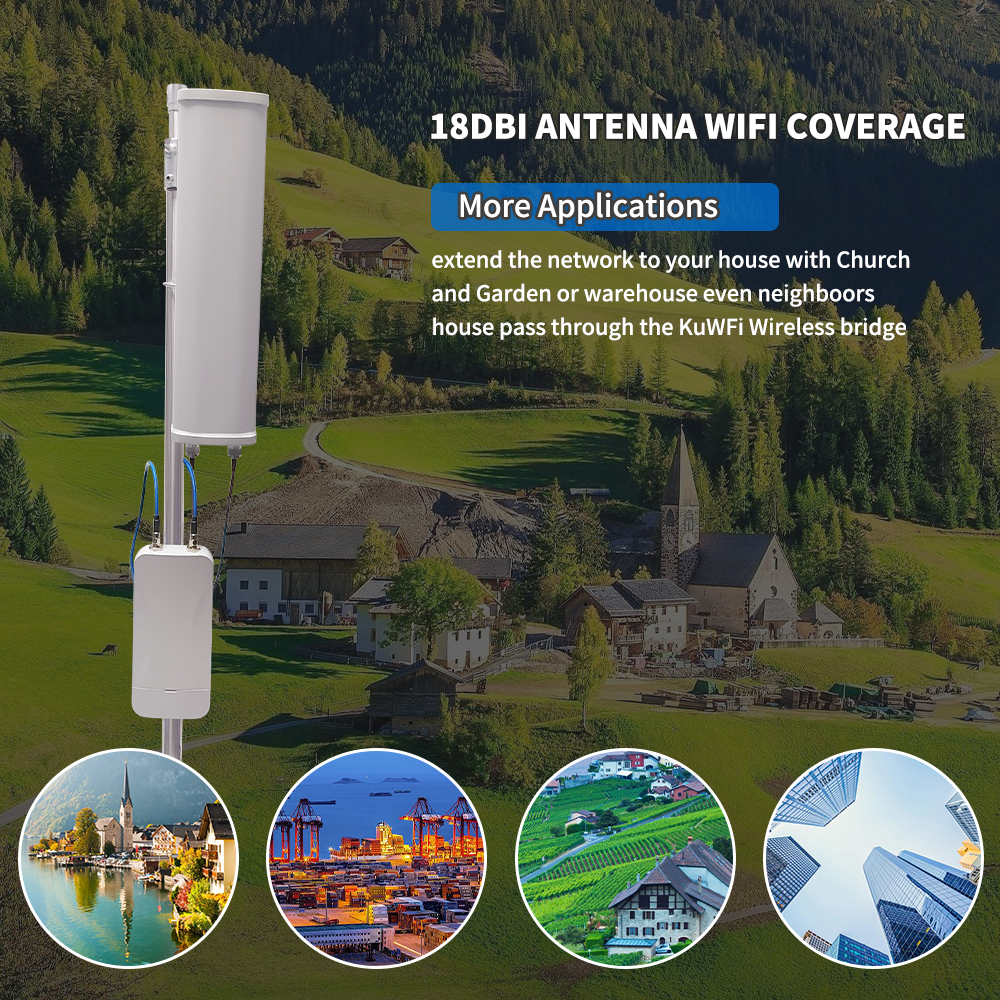
Wireless APs are divided into various types according to application scenarios and functional characteristics, meeting different coverage needs. Indoor APs mainly include panel APs and ceiling-mounted APs: panel APs are small in size, suitable for installation in hotel rooms, apartments, and offices, avoiding signal attenuation caused by wall penetration and ensuring stable WiFi coverage in each room; ceiling-mounted APs have a wide coverage range, suitable for large indoor spaces such as classrooms, meeting halls, and shopping malls, and can support multiple terminal accesses at the same time. Outdoor APs are designed with industrial-grade protection, featuring dustproof, waterproof, and anti-ultraviolet properties, suitable for outdoor scenarios such as campuses, parks, and industrial parks, and can cover a radius of 100-300 meters.
The key to building a high-performance wireless network lies in scientific AP deployment. First, the number and location of APs should be determined according to the space area, wall material, and terminal density. For example, in hotel rooms and apartments, it is recommended to install one panel AP per room to avoid signal attenuation caused by wall penetration; in large venues such as banquet halls and gymnasiums, high-density APs or dual-band APs should be deployed to meet the needs of a large number of terminal accesses. Second, attention should be paid to channel planning to avoid signal interference between adjacent APs—adjacent APs should use non-overlapping channels, and the distance between APs should be controlled to ensure coverage overlap without mutual interference. Third, choose APs that support advanced technologies such as WiFi 6 (802.11ax), which can improve transmission speed, reduce latency, and support more terminal devices, meeting the needs of high-definition video playback, online office, and IoT device connection.
Typical application scenarios of wireless APs are extremely wide. In homes, a single wireless AP can meet the WiFi needs of the whole family, supporting multiple devices such as mobile phones, tablets, and smart TVs to connect at the same time. In enterprises and offices, multiple APs are deployed to form a wireless network covering the entire office area, enabling employees to work online anytime and anywhere. In hotels and guesthouses, panel APs are installed in each room to provide high-speed and stable WiFi for guests, improving the guest experience. In schools and campuses, outdoor APs and indoor APs are combined to realize full coverage of the campus, supporting teaching activities such as smart classrooms and online courses. In large venues such as stadiums and exhibition centers, high-density APs are deployed to meet the network needs of thousands of people at the same time.
When selecting a wireless AP, the following factors should be considered: first, the transmission rate and WiFi standard, and it is recommended to choose WiFi 6 APs to ensure high-speed and stable transmission; second, the number of supported terminal devices, which should be matched with the actual terminal density (for example, home APs support 30 devices or less, and enterprise APs support 50 devices or more); third, the coverage range and signal strength, which should be selected according to the space size; fourth, the installation method and protection level, indoor scenes can choose ordinary APs, and outdoor scenes must choose industrial-grade outdoor APs with high protection level. In addition, APs that support centralized management (such as thin APs matching AC controllers) are preferred for enterprise scenarios, which can facilitate unified configuration, monitoring, and maintenance of multiple APs.
In summary, wireless APs are the core devices for building wireless networks, with the advantages of flexible deployment, wide coverage, and multi-terminal access. By selecting the appropriate type of AP and adopting scientific deployment strategies, we can build a stable, efficient, and scalable wireless network, meeting the diverse wireless access needs of homes, enterprises, and public places.
发表回复
要发表评论,您必须先登录。